THE NAMES OF THINGS
WAR ROOM — THE NAMES OF THINGS
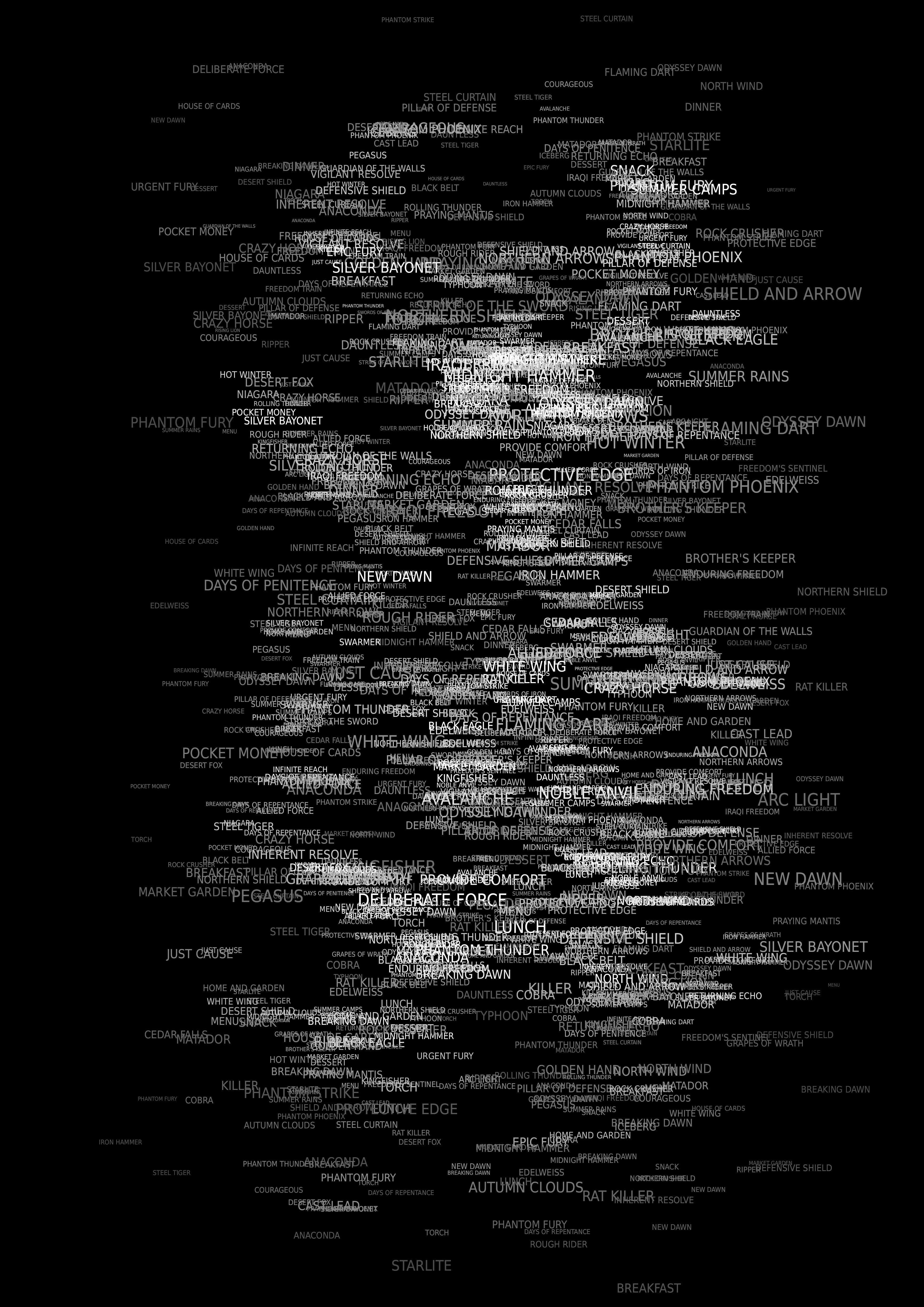
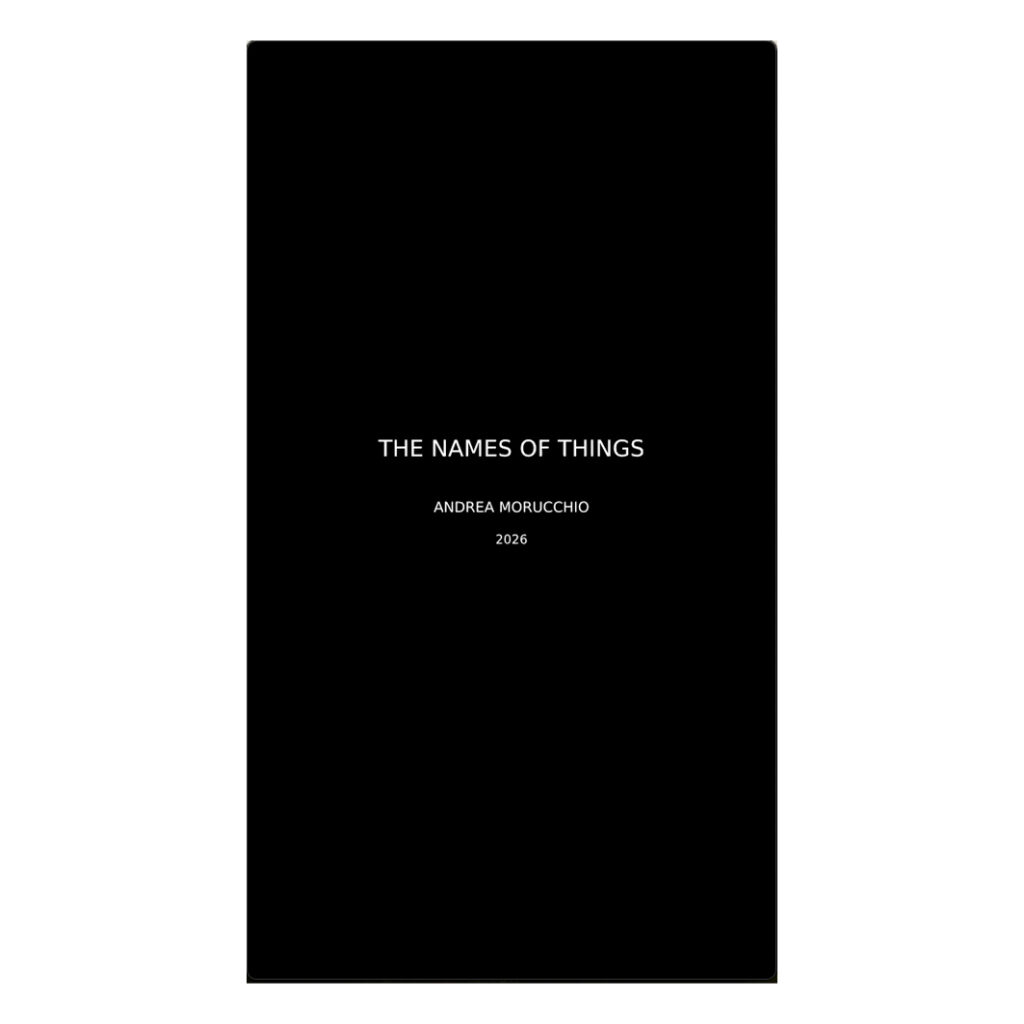
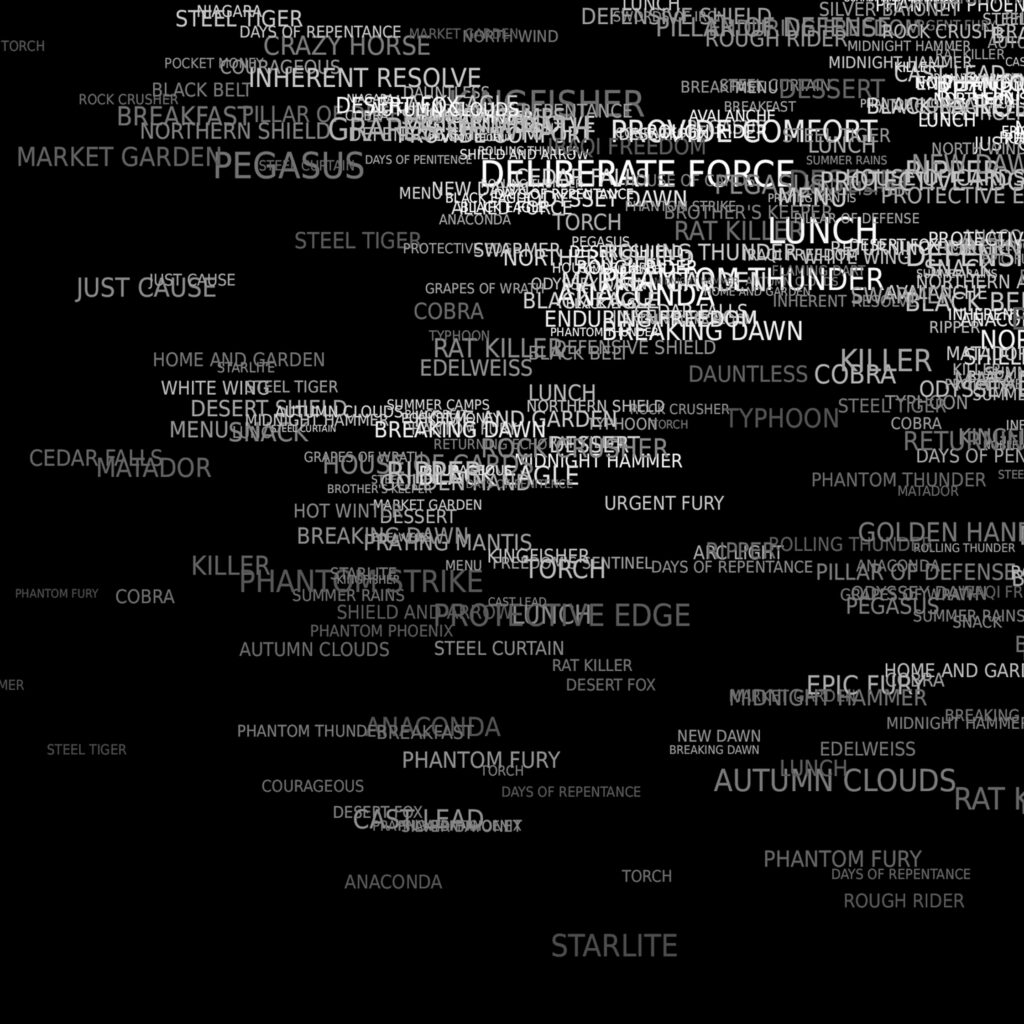
Dal 5 al 29 novembre 2026, durante l'ultimo mese della 61ª Biennale d'Arte di Venezia, Andrea Morucchio partecipa a WAR ROOM, mostra collettiva curata da Vanya Balogh in collaborazione con Sieger Gallery, allestita in uno spazio indipendente adiacente alle Gallerie dell'Accademia. Il progetto riunisce 23 artisti invitati a confrontarsi con il tema della guerra attraverso la realizzazione di poster e la presentazione di opere video. Le pareti dello spazio espositivo vengono interamente ricoperte da manifesti in bianco e nero, tutti in formato A3 e riprodotti in circa dieci esemplari per ciascun artista, dando forma a un ambiente visivamente saturo, al quale si affiancano diverse videoproiezioni. Morucchio partecipa con l'opera audiovisiva THE NAMES OF THINGS e con un poster appositamente elaborato attraverso lo stesso procedimento compositivo utilizzato nel video. Le due opere, concepite per agire in relazione all'interno dello spazio espositivo, affrontano il linguaggio attraverso cui le operazioni militari vengono denominate e presentate all'opinione pubblica.

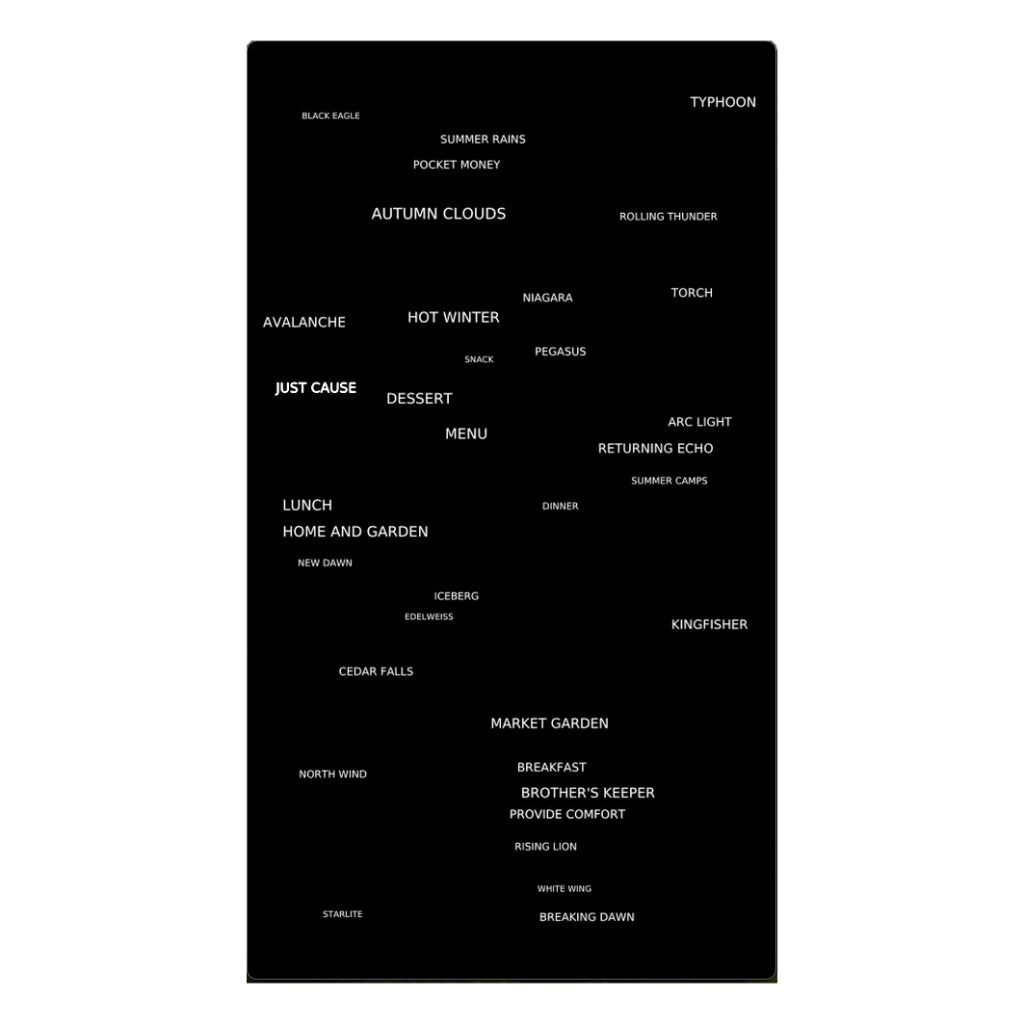
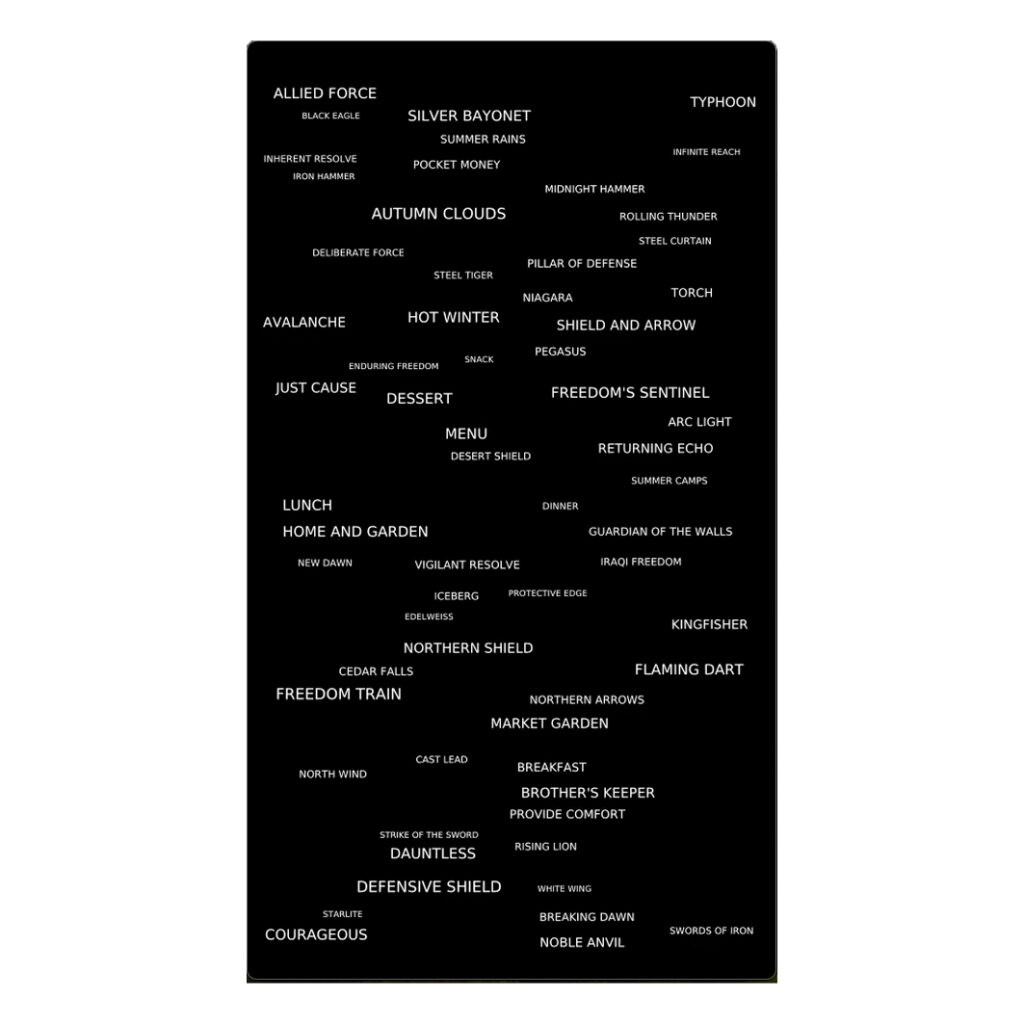
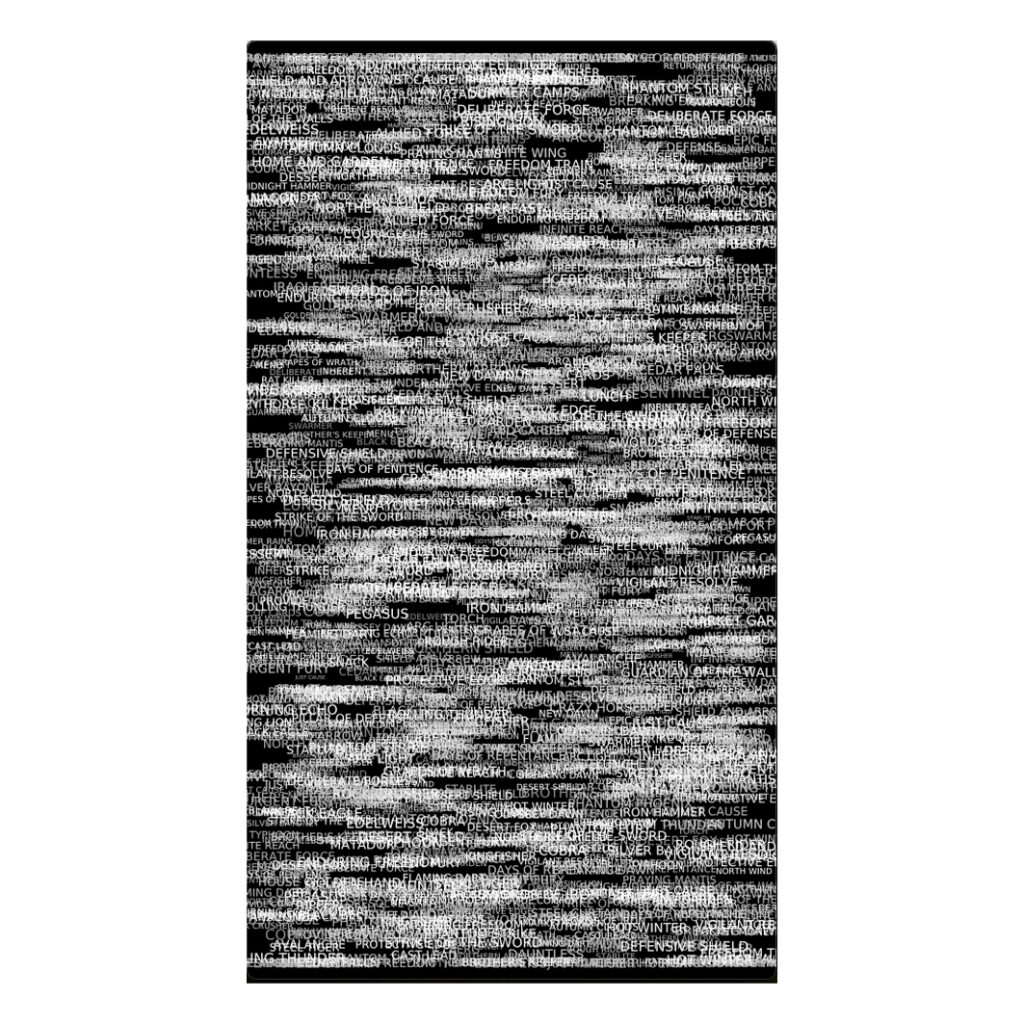
Le guerre hanno nomi. Non soltanto quelli con cui vengono ricordate dalla storia, ma quelli che gli apparati militari attribuiscono alle operazioni prima ancora che abbiano luogo. Denominazioni che evocano fenomeni naturali, condizioni atmosferiche, qualità morali e principi universali, ma anche situazioni domestiche, abitudini quotidiane e oggetti di uso comune. Nomi come Breakfast, Dessert, Pocket Money, Dinner o Summer Rains sembrano appartenere a un universo completamente estraneo alla guerra, talvolta persino infantile. La loro stravagante assurdità potrebbe suscitare ilarità, se non fosse per la gravità delle azioni che identificano e per le conseguenze umane dei conflitti di cui fanno parte. L'accostamento tra un immaginario così innocuo e la realtà della violenza militare rivela un paradosso inquietante, quasi una banalizzazione infantile della guerra, che si affianca alle più riconoscibili strategie di legittimazione eufemistica e propagandistica. In THE NAMES OF THINGS, Morucchio assume questo repertorio linguistico come materia dell'opera. Ottantanove denominazioni autentiche di operazioni militari, appartenenti a un arco storico che si estende dalla Wehrmacht durante la Seconda guerra mondiale alle operazioni condotte dagli Stati Uniti, dalla NATO e da Israele nei conflitti successivi, fino al presente, vengono isolate dai rispettivi contesti e presentate su uno sfondo nero. Non compongono una cronologia: la loro successione è organizzata attraverso accostamenti, assonanze e suggestioni semantiche che fanno emergere affinità inattese tra parole provenienti da epoche e situazioni differenti.

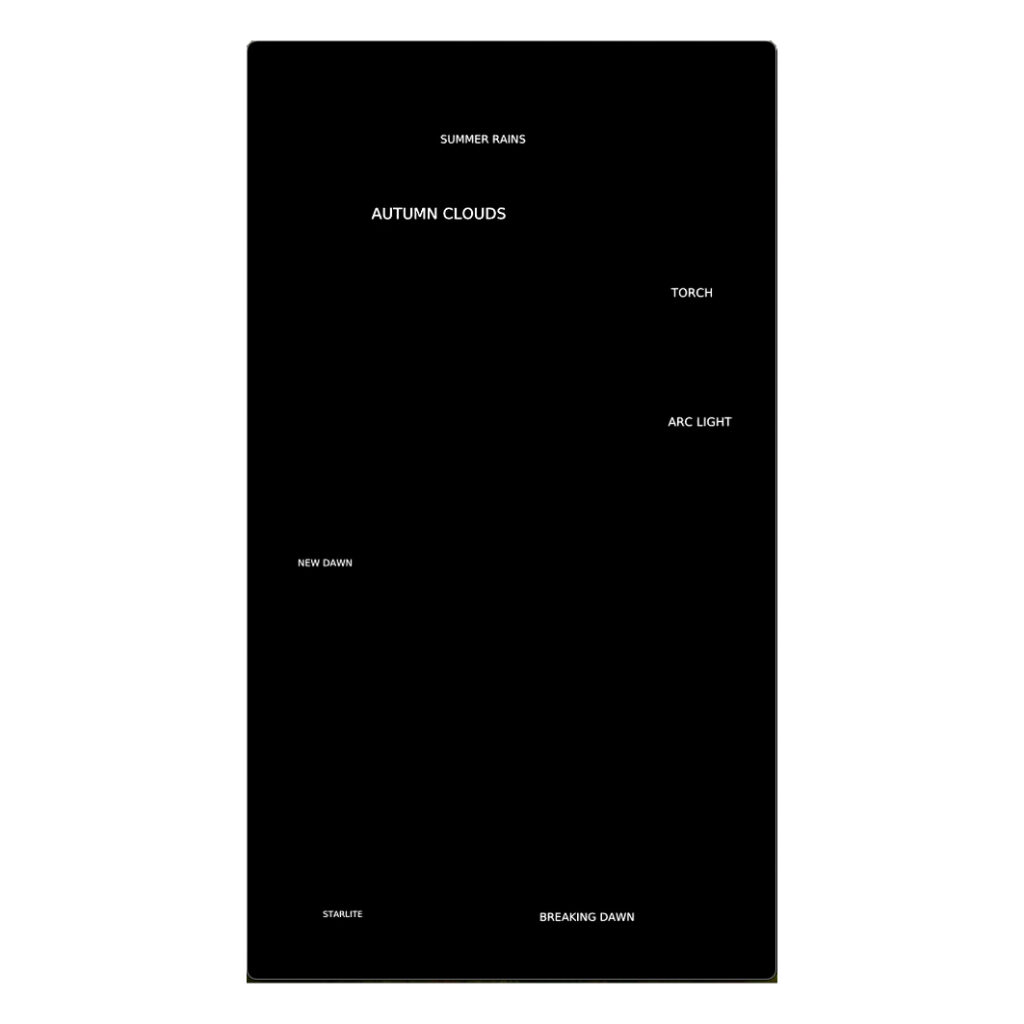
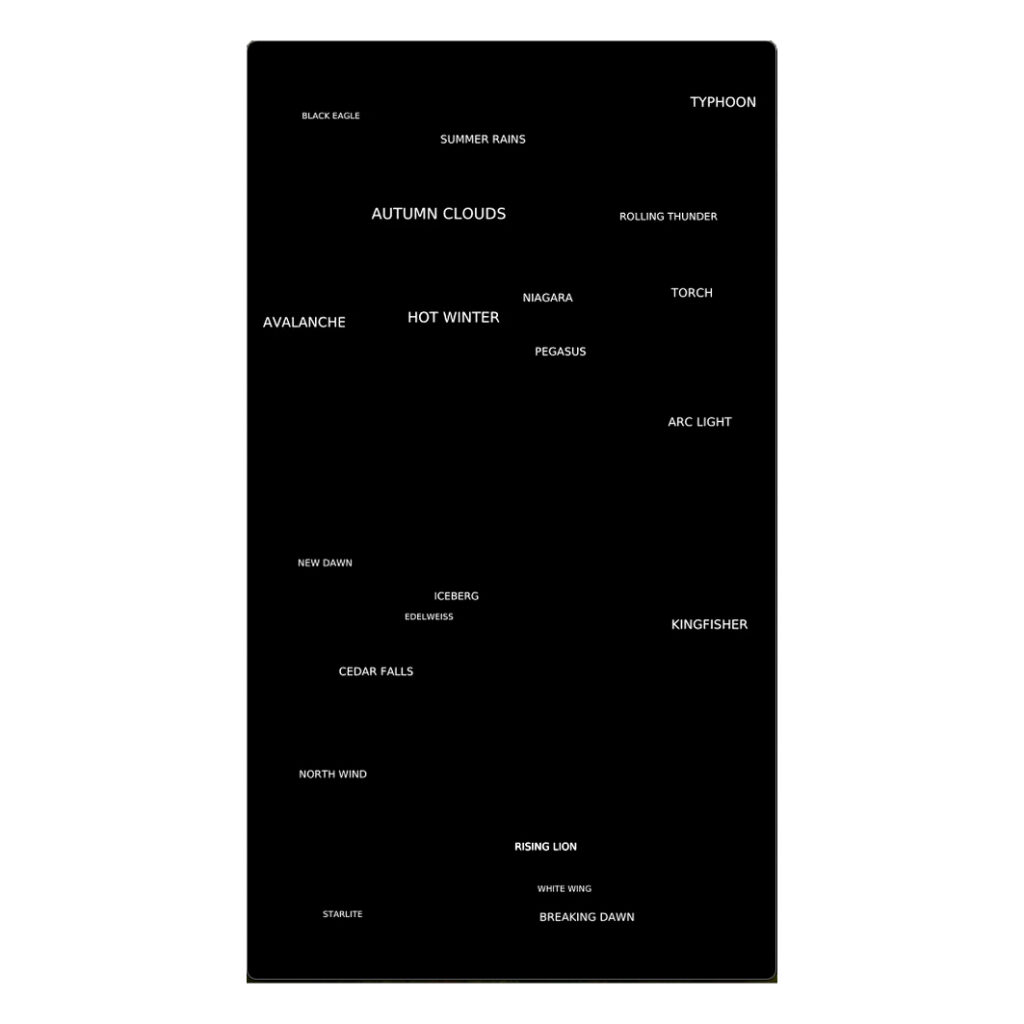
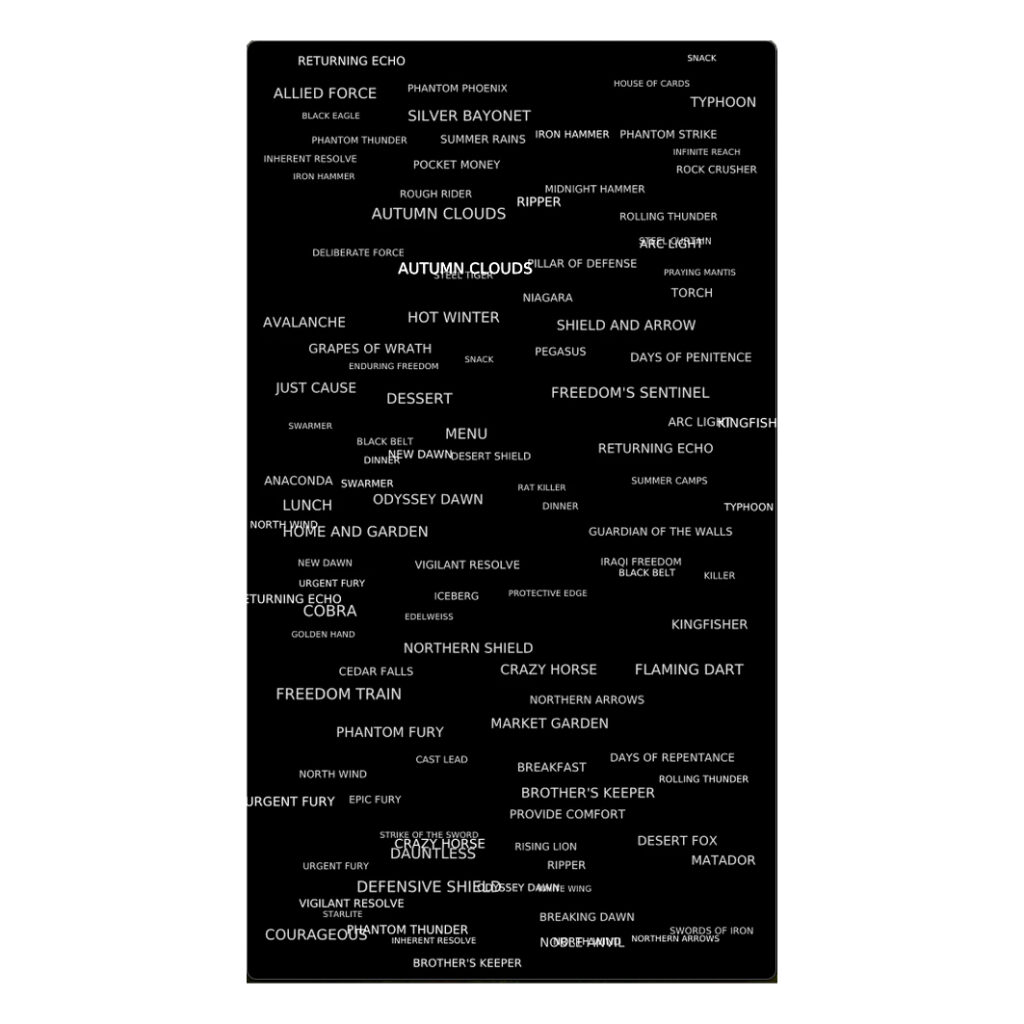
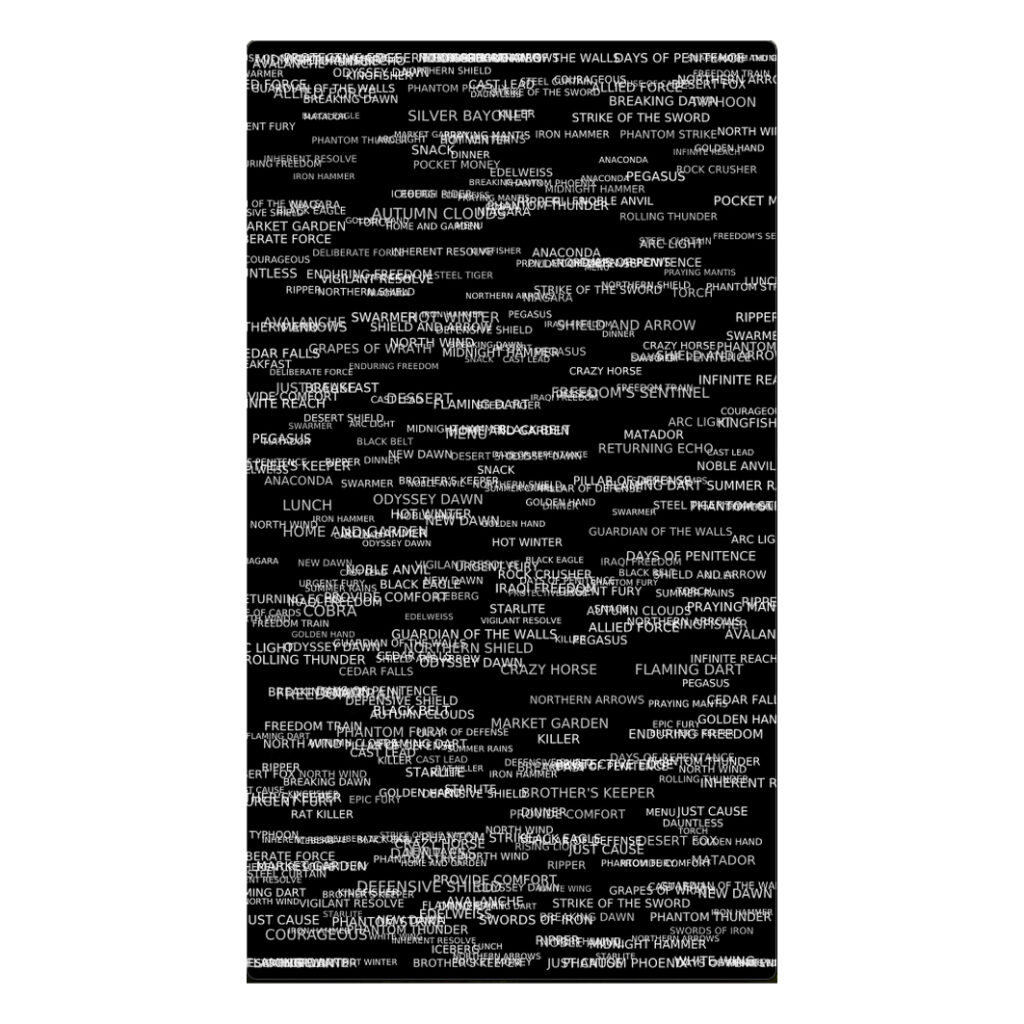
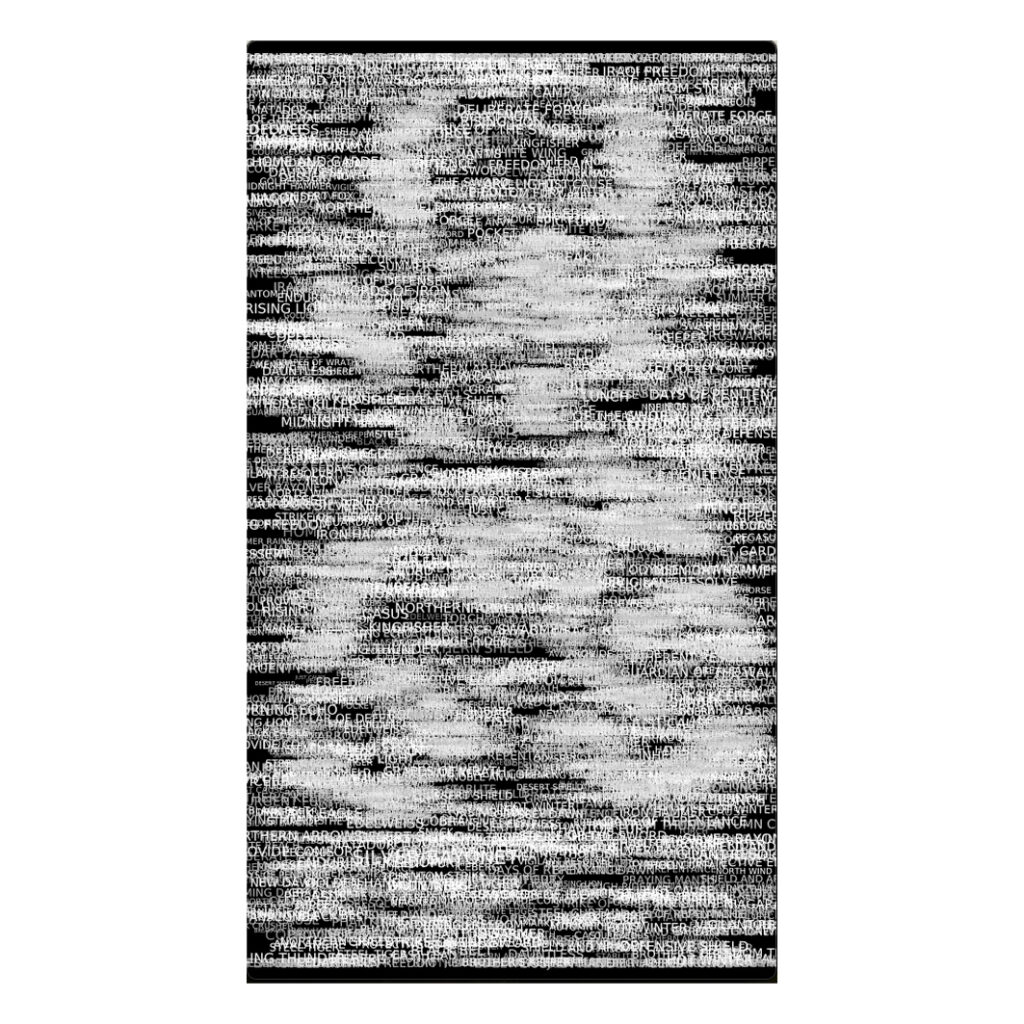
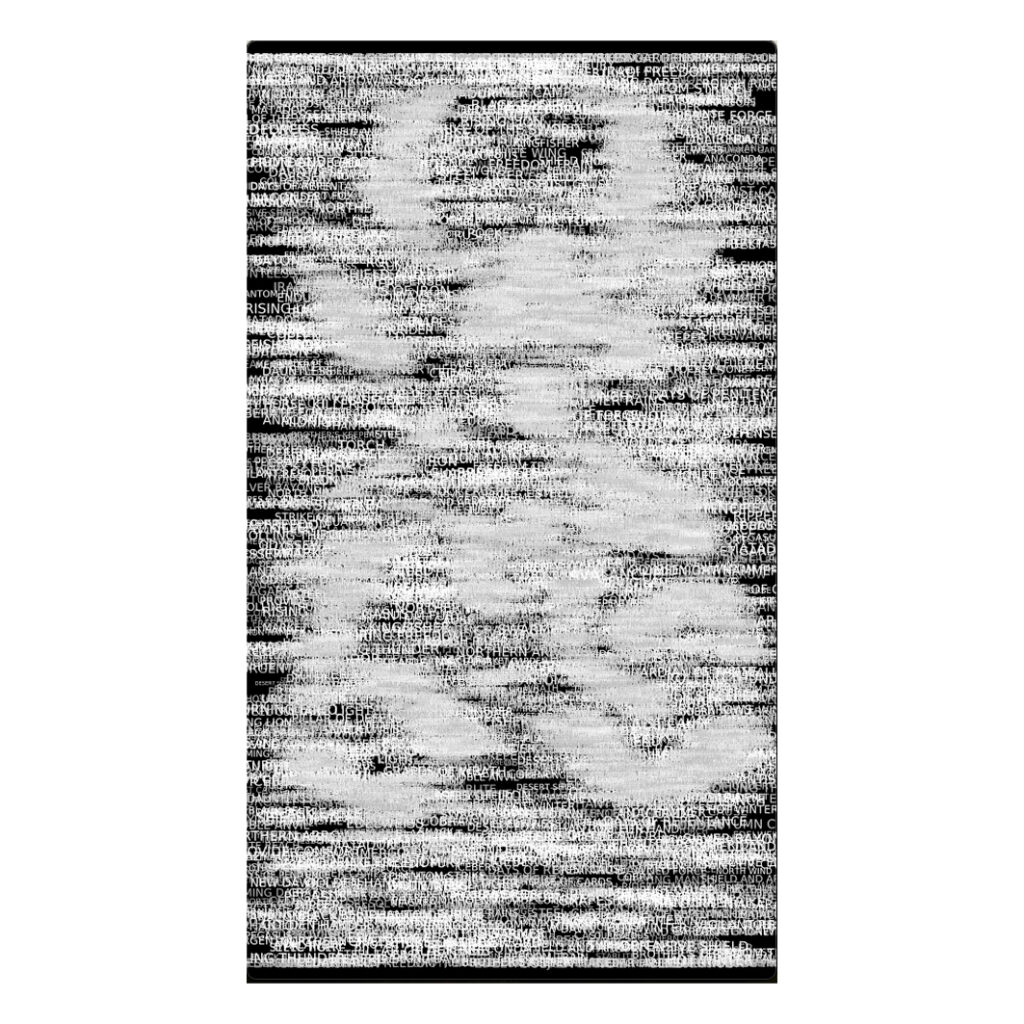
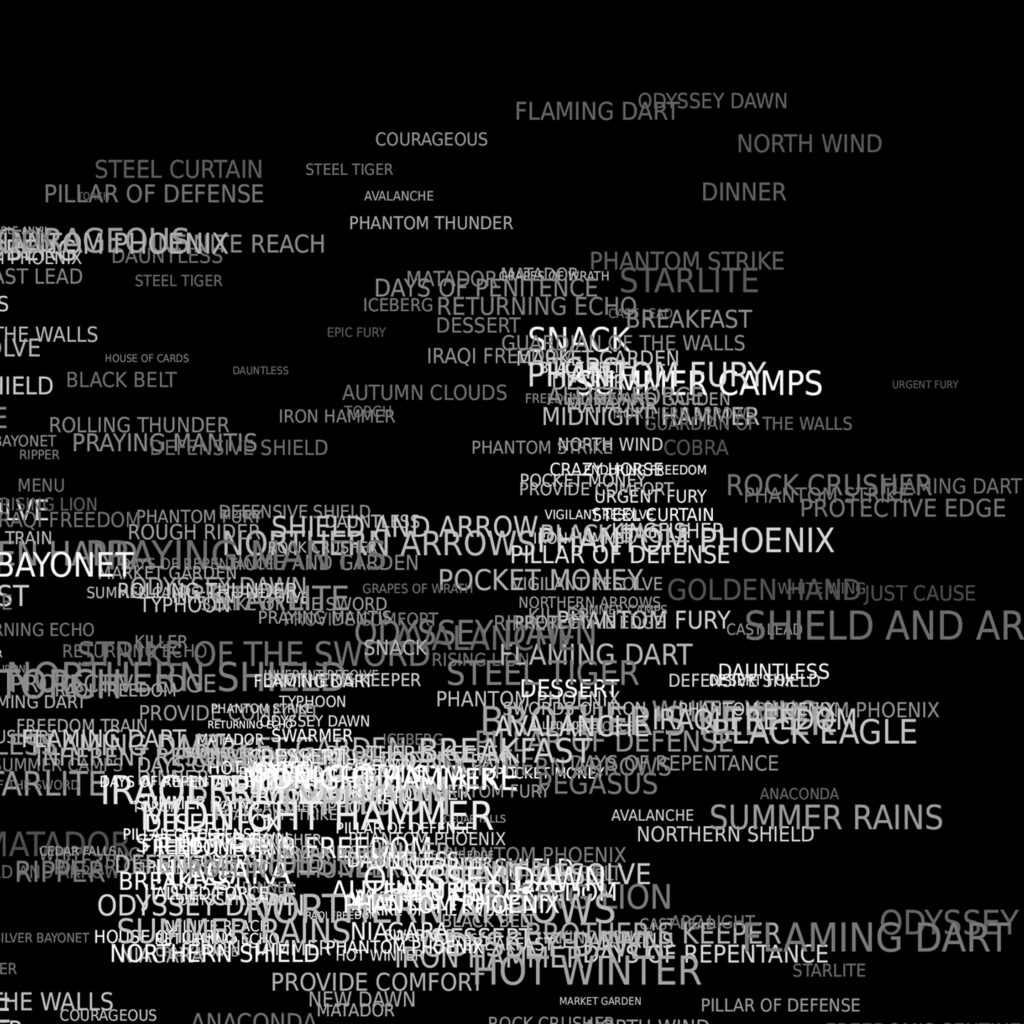
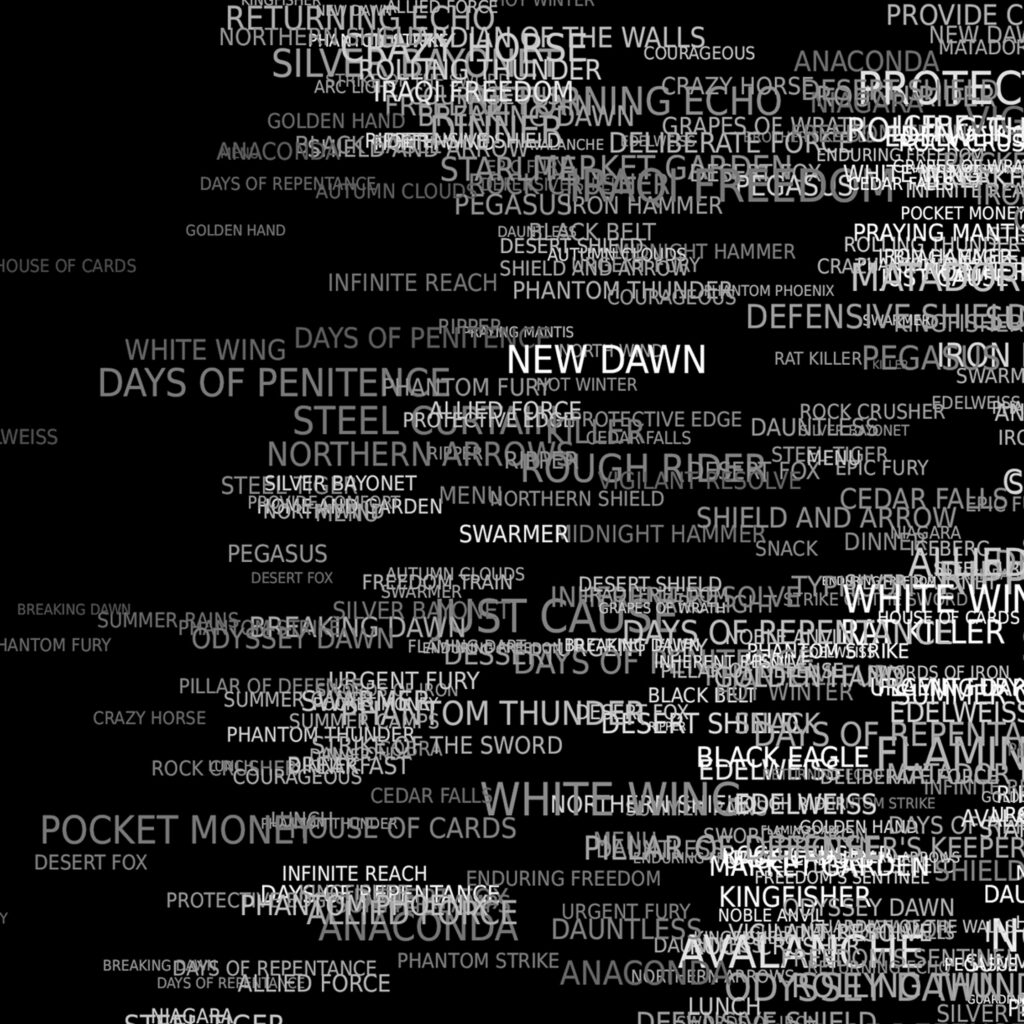
Liberati temporaneamente dai fatti cui si riferiscono, questi nomi rivelano una singolare autonomia espressiva. Alcuni sembrano titoli poetici, altri slogan o dichiarazioni d'intenti. Non tutte le formule operano allo stesso modo: alcune ricorrono alla metafora, altre all'affermazione di valori o alla rivendicazione di una legittimità morale. In comune hanno la capacità di presentare un'azione militare attraverso parole che ne orientano anticipatamente l'interpretazione, contribuendo a costruire una rappresentazione della guerra distante dalle sue conseguenze concrete. La dimensione sonora introduce un ulteriore elemento. È la voce dello stesso artista a pronunciare i nomi, talvolta in coincidenza con la loro comparsa sullo schermo, talvolta secondo un andamento indipendente. La parola scritta e quella pronunciata instaurano così un rapporto mobile, nel quale lettura e ascolto non coincidono necessariamente. Nella sequenza visiva, i nomi compaiono inizialmente isolati, distribuiti in punti diversi dello schermo e separati da ampie zone nere. La composizione si sviluppa attraverso una progressiva moltiplicazione delle scritte, che dapprima convivono mantenendo una propria leggibilità, poi si addensano e si sovrappongono fino a occupare quasi interamente lo spazio. Parallelamente, le voci si accumulano in una crescente cacofonia. Il linguaggio, inizialmente esibito nella sua capacità di identificare gli eventi, perde progressivamente la propria funzione comunicativa. L'accumulo produce una condizione nella quale la quantità delle informazioni non coincide più con la possibilità di comprenderle. Il procedimento si inserisce in una ricerca che Morucchio conduce da tempo sulle relazioni tra informazione, potere e percezione. Attraverso linguaggi e modalità espressive differenti, l'artista ha indagato il ruolo della comunicazione nella costruzione delle rappresentazioni collettive, i meccanismi attraverso cui le narrazioni politiche e mediatiche orientano la lettura degli eventi e la difficoltà dell'individuo di sottrarsi a interpretazioni della realtà presentate come evidenze indiscutibili. La raccolta e la riorganizzazione di materiali preesistenti costituiscono una componente ricorrente di questa ricerca: parole, immagini e documenti vengono sottratti ai loro contesti abituali e ricomposti in strutture capaci di metterne in evidenza contraddizioni, ambiguità e significati impliciti. In THE NAMES OF THINGS, tale metodologia trova una formulazione particolarmente essenziale: nessuna immagine di battaglia, nessuna rappresentazione diretta della distruzione, ma soltanto le parole scelte per nominare le operazioni militari.

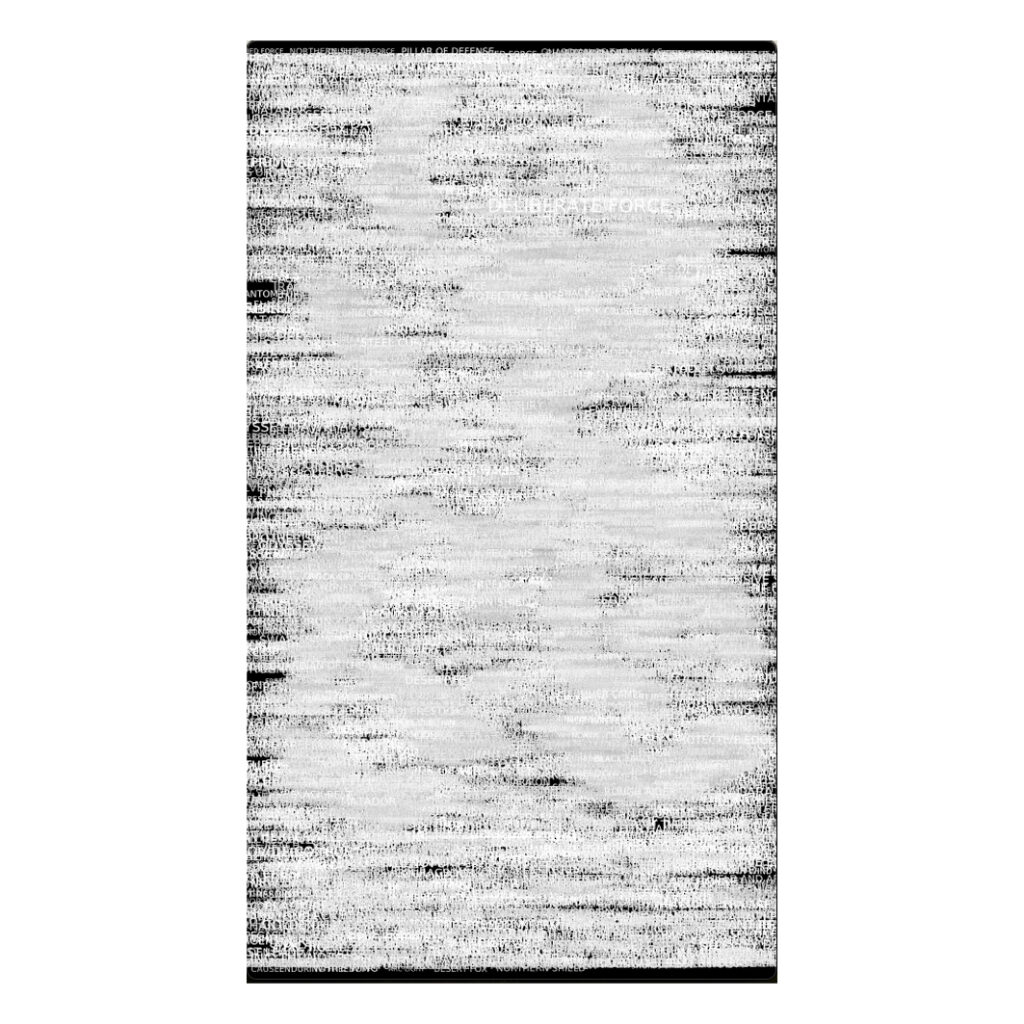
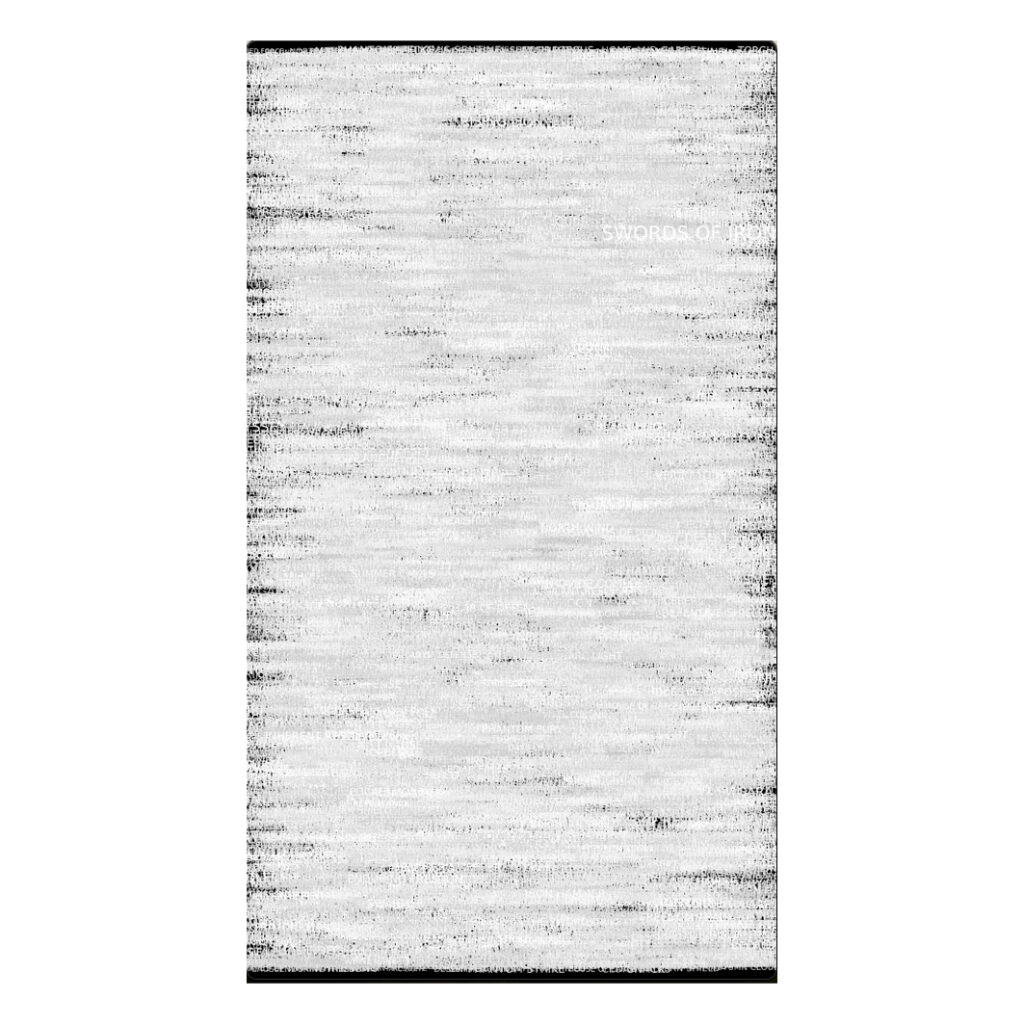
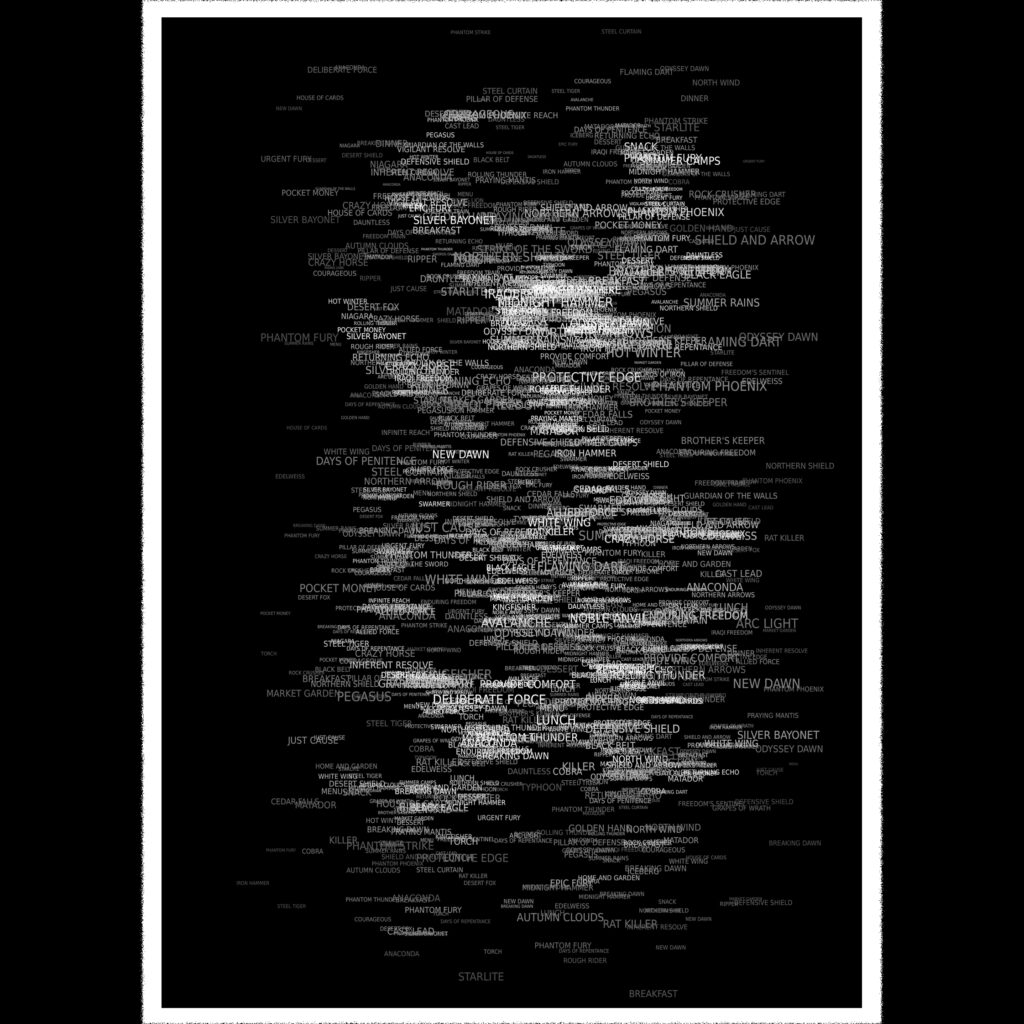
Nella fase conclusiva del video, quando le sovrapposizioni trasformano progressivamente lo schermo in una superficie quasi completamente bianca, può affiorare una figura appena riconoscibile. È Moloch, divinità associata, secondo una tradizione iconografica negativa, al sacrificio dei bambini. I suoi contorni sono predisposti fin dall'inizio attraverso la distribuzione dei nomi e diventano eventualmente percepibili soltanto con il loro progressivo accumularsi. Moloch introduce un secondo livello di lettura. Nella visione dell'artista, la figura del sacrificio diventa metafora di un sistema di potere nel quale apparati militari, interessi industriali e finanziari e tecnologie di controllo e condizionamento dell'informazione risultano intrecciati, richiamando e ampliando al presente la questione del complesso militare-industriale sollevata da Dwight D. Eisenhower. La difficoltà di distinguere la figura assume tuttavia un significato più ampio: allude alla possibilità che le cause profonde dei conflitti e delle crisi contemporanee, così come gli interessi e le responsabilità che concorrono a determinarli, rimangano nascosti dietro rappresentazioni della realtà che, nella lettura critica dell'artista, possono distorcere i rapporti di causa ed effetto e indirizzare altrove l'attribuzione delle responsabilità. La presenza quasi invisibile di Moloch diventa così metafora di ciò che può rimanere inavvertito anche quando si trova davanti ai nostri occhi. Questa interpretazione richiama la figura degli APOTI, già presente nella ricerca di Morucchio: coloro che non accettano passivamente ciò che viene loro raccontato e cercano di riconoscere ciò che si cela dietro le narrazioni dominanti. La possibilità di scorgere la figura assume dunque un valore simbolico legato all'esercizio della coscienza critica, senza implicare una corrispondenza effettiva tra riconoscimento visivo e comprensione della realtà. Il poster realizzato per WAR ROOM costituisce un'opera complementare al video, sviluppata attraverso il medesimo processo di composizione e distribuzione dei nomi delle operazioni militari. In questa elaborazione, tuttavia, le parole vengono organizzate in modo da delineare una figura di Moloch più leggibile rispetto a quella che affiora fugacemente nella sequenza audiovisiva. L'immagine fissa consente di soffermarsi sulla figura e sulle sue implicazioni simboliche, mentre il video ne conserva la dimensione quasi subliminale. Le due opere agiscono in sinergia nello stesso ambiente espositivo, instaurando un rapporto tra immagine fissa e immagine in movimento, tra osservazione prolungata e percezione fugace. Inserito nella fitta successione dei manifesti che rivestono le pareti dello spazio, il poster stabilisce inoltre una relazione con il procedimento di accumulazione visiva che caratterizza il video: alla sovrapposizione dei nomi all'interno dell'immagine corrisponde, nell'allestimento collettivo, la moltiplicazione delle immagini nello spazio. Attraverso la ricomposizione delle denominazioni militari, la voce e la progressiva saturazione audiovisiva, THE NAMES OF THINGS mette in discussione il rapporto tra linguaggio, rappresentazione della guerra e costruzione della percezione collettiva. Nella presenza complementare del video e del poster all'interno di WAR ROOM, la ricerca si sviluppa attraverso due differenti modalità percettive, interrogando la capacità delle parole e delle immagini di orientare la comprensione degli eventi e, al tempo stesso, di occultarne le conseguenze e le responsabilità.
//
From 5 to 29 November 2026, during the final month of the 61st Venice Art Biennale, Andrea Morucchio participates in WAR ROOM, a group exhibition curated by Vanya Balogh in collaboration with Sieger Gallery, held in an independent exhibition space adjacent to the Gallerie dell'Accademia. The project brings together 23 artists invited to explore the theme of war through the creation of posters and the presentation of video works. The walls of the exhibition space are entirely covered with black-and-white posters, all in A3 format and reproduced in approximately ten copies per artist, creating a visually saturated environment accompanied by a series of video projections. Morucchio participates with the audiovisual work THE NAMES OF THINGS and a poster specially developed using the same compositional process employed in the video. Conceived to interact within the exhibition space, the two works address the language through which military operations are named and presented to the public. Wars have names. Not only those by which they are remembered in history, but also those assigned by military authorities to operations before they even take place. Names that evoke natural phenomena, weather conditions, moral qualities and universal principles, but also domestic situations, everyday habits and ordinary objects. Names such as Breakfast, Dessert, Pocket Money, Dinner or Summer Rains seem to belong to a world entirely unrelated to war, at times even a childlike one. Their bizarre absurdity might provoke laughter, were it not for the gravity of the actions they designate and the human consequences of the conflicts of which they form part. The juxtaposition of such innocent imagery with the reality of military violence reveals a disturbing paradox, an almost childish trivialisation of war that exists alongside more recognisable strategies of euphemistic and propagandistic legitimisation. In THE NAMES OF THINGS, Morucchio takes this linguistic repertoire as the material of the work. Eighty-nine actual names of military operations, spanning a historical period from the Wehrmacht during the Second World War to operations conducted by the United States, NATO and Israel in subsequent conflicts, up to the present day, are removed from their original contexts and presented against a black background. They do not form a chronology: their sequence is arranged through juxtapositions, assonances and semantic associations that reveal unexpected affinities between words originating from different periods and circumstances. Temporarily detached from the events to which they refer, these names reveal a distinctive expressive autonomy. Some resemble poetic titles, others slogans or declarations of intent. Not all these expressions operate in the same way: some rely on metaphor, others on the affirmation of values or the assertion of moral legitimacy. What they share is the capacity to present a military action through words that guide its interpretation in advance, contributing to a representation of war removed from its concrete consequences.

The sound dimension introduces a further element. It is the artist's own voice that pronounces the names, sometimes coinciding with their appearance on screen, at other times following an independent rhythm. Written and spoken words thus establish a shifting relationship in which reading and listening do not necessarily coincide. In the visual sequence, the names initially appear in isolation, distributed across different areas of the screen and separated by large expanses of black. The composition develops through a progressive multiplication of the words, which at first coexist while retaining their individual legibility, then grow denser and overlap until they occupy almost the entire visual field. At the same time, the voices accumulate into a growing cacophony. Language, initially presented in its capacity to identify events, progressively loses its communicative function. Accumulation produces a condition in which the quantity of information no longer corresponds to the possibility of understanding it. This procedure forms part of Morucchio's longstanding investigation into the relationships between information, power and perception. Through different artistic languages and modes of expression, the artist has explored the role of communication in shaping collective representations, the mechanisms through which political and media narratives influence the interpretation of events, and the difficulty individuals face in resisting interpretations of reality presented as unquestionable truths. The collection and reorganisation of pre-existing materials constitute a recurring component of this research: words, images and documents are removed from their habitual contexts and recomposed into structures capable of revealing contradictions, ambiguities and implicit meanings. In THE NAMES OF THINGS, this methodology finds a particularly essential formulation: no images of battle, no direct representation of destruction, only the words chosen to name military operations.

In the final phase of the video, as the overlapping words progressively transform the screen into an almost entirely white surface, a barely recognisable figure may emerge. It is Moloch, a deity associated, within a negative iconographic tradition, with the sacrifice of children. Its outlines are established from the outset through the distribution of the names and may become perceptible only as they progressively accumulate. Moloch introduces a second level of interpretation. In the artist's vision, the figure of sacrifice becomes a metaphor for a system of power in which military institutions, industrial and financial interests, and technologies of control and information conditioning are intertwined, recalling and extending into the present the issue of the military-industrial complex raised by Dwight D. Eisenhower. The difficulty of discerning the figure, however, assumes a broader significance: it alludes to the possibility that the underlying causes of contemporary conflicts and crises, as well as the interests and responsibilities that contribute to bringing them about, may remain concealed behind representations of reality which, in the artist's critical reading, can distort relationships of cause and effect and redirect the attribution of responsibility elsewhere. Moloch's almost invisible presence thus becomes a metaphor for what may go unnoticed even when it is directly before our eyes. This interpretation also recalls the figure of the APOTI, already present in Morucchio's artistic research: those who do not passively accept what they are told and seek to recognise what lies behind dominant narratives. The possibility of discerning the figure therefore acquires a symbolic meaning associated with the exercise of critical awareness, without implying any actual correspondence between visual recognition and an understanding of reality.

The poster created for WAR ROOM constitutes a complementary work to the video, developed through the same process of composing and distributing the names of military operations. In this version, however, the words are arranged to delineate a more legible figure of Moloch than the one that fleetingly emerges in the audiovisual sequence. The still image allows viewers to dwell on the figure and its symbolic implications, while the video preserves its almost subliminal dimension. The two works operate in synergy within the same exhibition environment, establishing a relationship between still and moving images, between sustained observation and fleeting perception. Incorporated into the dense succession of posters covering the walls of the space, the poster also establishes a connection with the process of visual accumulation that characterises the video: the overlapping of names within the image finds a counterpart in the multiplication of images throughout the collective installation. Through the recomposition of military operation names, the artist's voice and the progressive saturation of the audiovisual space, THE NAMES OF THINGS questions the relationship between language, the representation of war and the shaping of collective perception. Through the complementary presence of the video and the poster within WAR ROOM, this investigation unfolds through two distinct modes of perception, examining the capacity of words and images to shape our understanding of events while simultaneously concealing their consequences and the responsibilities behind them.
artworks
books
media
essay
EXTRAS TEMPLATE